

January 2026

IN THIS EDITION...
How an underground lab is driving quantum research
Quantum computers due to tiny new device?
OEDIT, University of Colorado accepting grants
Proposed tax incentive for quantum research
Jobs, events, and more!
The Quantum Lead
New Underground Lab Spaces Drive Next-Level Quantum Research

A new kind of laboratory is taking shape in the foothills west of Golden, Colorado. The Colorado Underground Research Institute—known as CURIE—is transforming part of the historic Edgar Experimental Mine, a teaching and laboratory space long used by Mines students and researchers for hands-on mining education, into a one-of-a-kind setting for cutting-edge quantum research.
Together, these efforts place Mines at the forefront of quantum sensing, precision measurement and discovery, bridging physics, engineering, computation and materials science in an environment unlike any other.
Quantum Future
Tiny New Device Could Enable Giant Future Quantum Computers
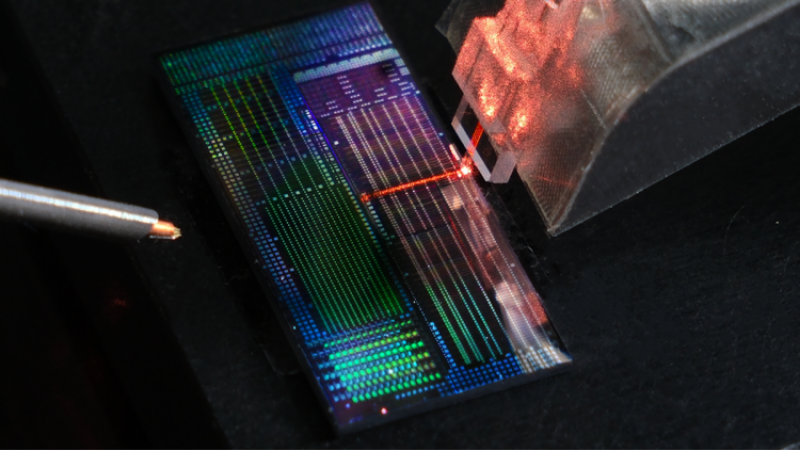
Researchers have made a major advance in quantum computing with a new device that is nearly 100 times smaller than the diameter of a human hair.
Published in the journal Nature Communications, the breakthrough optical phase modulators could help unlock much larger quantum computers by enabling efficient control of lasers required to operate thousands or even millions of qubits — the basic units of quantum information.
Critically, the team of scientists have developed these devices using scalable manufacturing, avoiding complex, custom builds in favor of those used to make the same technology behind processors already found in computers, phones, vehicles, home appliances — virtually everything powered by electricity and even toasters.
Led by Jake Freedman, an incoming University of Colorado-Boulder PhD student in the Department of Electrical, Computer & Energy Engineering; Matt Eichenfield, professor and the Karl Gustafson Endowed Chair in Quantum Engineering; and collaborators from Sandia National Laboratories, including co-senior author Nils Otterstrom, they created a device that is not only tiny and powerful, but also practical and inexpensive to mass-produce.
Quantum Investment
OEDIT Transitional Quantum Research Seed Grants

In partnership with the Colorado Office of Economic Development and International Trade (OEDIT), the University of Colorado welcomes proposals for translational quantum research seed grants. Seed grants are open to any Colorado research institution and industry partners. The goals of the programs are to incentivize innovations launched out of the lab and help them along the development path to new programs and businesses.
Summary Information
Award Amount: $50,000
Award Duration: 12 months
Total funded awards: Up to 12 awards anticipated in 2026
Proposal Deadline: February 22, 2026
Total Program Funding: $1.2 over 3 years
Funding Offices: CU Boulder Research & Innovation Office (RIO)
Quantum Advancement
Proposed Tax Incentive for Quantum Companies Could Be ‘Meaningful Anchor’ for Industry
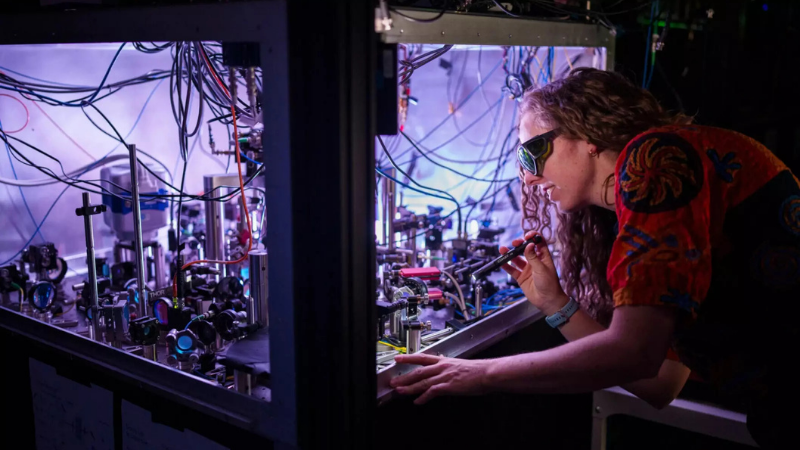
New Mexico is positioning itself as a national leader in quantum technology, and a proposed multimillion‑dollar tax incentive is emerging as a key part of that strategy. The $50 million incentive could help anchor a fast‑growing industry already benefiting from partnerships with the Defense Advanced Research Projects Agency (DARPA) and a strong concentration of quantum talent at national labs and universities.
The proposal is designed to support companies investing heavily in manufacturing and infrastructure, with eligibility tied to at least $5 million in spending and a cap of $30 million per business.
Quantum Innovation
Colorado School of Mines Establishes Nation’s First Quantum Systems Engineering Bachelor’s Degree
Another quantum breakthrough in Colorado.
Colorado School of Mines is launching a new bachelor’s degree in quantum systems engineering, creating the first baccalaureate degree of its kind in the U.S and a critical bridge for building the workforce needed to transform quantum breakthroughs into real-world technologies.
More than half of today’s quantum jobs require a bachelor’s degree or less, but almost all quantum education and training programs in the U.S. are at the master’s and PhD level. The Bachelor of Science in Quantum Systems Engineering at Mines fills an important gap in the educational pathway from K-12 through graduate study.
Quantum Partnership
Lightwave Logic, QPICs Announce Partnership to Advance Use of Electro-Optic Polymers in Quantum Processors

Lightwave Logic, Inc. and QPICs, a newly established foundry dedicated to advancing Photonic Integrated Circuit (PIC) based quantum technology as part of the Quantum Tech Hub initiative in Colorado, announced the signing of a memorandum of understanding (MOU) to accelerate the use of electro-optic polymers for the commercialization of photonic quantum circuits.
The MOU will enable QPICs to develop Process Design Kits (PDKs) with Lightwave Logic's proprietary polymer platform and encapsulation processes with the goal of accelerating PIC production timelines for quantum computing customers. The availability of the PDK will allow these customers to design custom solutions based on silicon circuits without the need for extensive modifications of PIC manufacturing processes.
Quantum Education
Elevate Quantum Education Workshop

Are you a STEM instructor interested in introducing one of the most exciting emerging technologies of the future to your students?
If so, join a Quantum Education Workshop designed to introduce community college and undergraduate faculty across New Mexico and the Mountain West to the fast-growing field of quantum information science.
This workshop will:
Build Awareness of regional quantum ecosystem initiatives and workforce development programs.
Share Resources you can use to start introducing quantum concepts to your students.
Create Partnerships for faculty and institutions who are ready to dive into quantum education.
Grow Your Network with peers, administrators, and leaders in the field across the region.
Quantum Collaboration
Quantinuum Collaboration Aims at Using AI to Write Quantum Algorithms
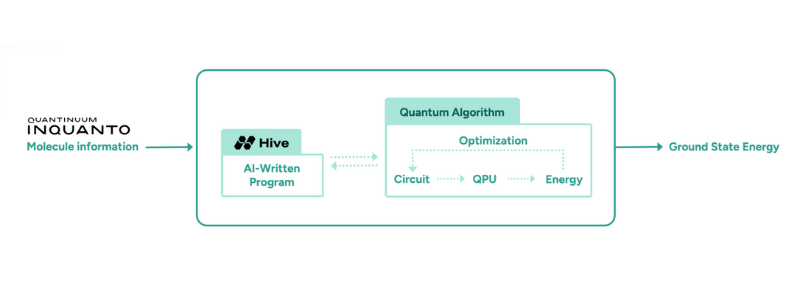
Large language models are beginning to generate quantum algorithms that match and, in some cases, surpass human-engineered methods, according to a blog post about new research from Quantinuum and Hiverge. The preliminary findings suggest this could lead to a shift in how quantum software may be developed.
The work directly addresses a long-standing obstacle in quantum computing. Even as hardware improves, the algorithms needed to run real chemistry and materials problems remain difficult and expensive to design. Access to high-fidelity quantum processors is limited, so every extra circuit evaluation or unnecessary gate adds to the cost. Variational quantum algorithms, widely used for near-term chemistry simulations, require careful choices about which quantum operators to include, how to optimize their parameters, and how to keep noise from overwhelming the calculation.
Have an event, job posting or achievement to celebrate with the quantum community? Click below to submit your information, and we’ll update here and on our website!